
Edutech Global

From Gwalior to the Globe

From Gwalior to the Globe: Success Stories of Students Who Studied Abroad

The dream of studying abroad is no longer limited to students from India’s metro cities. Today, ambitious students from Gwalior are earning admission to leading universities across the world and building successful international careers. With better access to information, professional guidance, scholarships, and globally recognized universities, Study Abroad from Gwalior has become more achievable than ever before. Whether your goal is to Study in UK, Study in Germany, Study in Canada, or Study in Ireland, the right planning and expert support can make your journey smoother. Every successful overseas education journey starts with a clear vision, careful preparation, and determination. In this blog, we’ll explore inspiring student success stories, common challenges, and practical tips that can help aspiring students take their first confident step toward Overseas Education. Why More Students from Gwalior Are Choosing to Study Abroad The demand for international education has grown significantly among students in Gwalior over the past few years. Here’s why: Greater awareness about global education opportunities. Access to world-class universities and modern learning environments. Better career prospects with international employers. Affordable destinations offering quality education and scholarships. Guidance from experienced Study Abroad Consultants in Gwalior who simplify the admission and visa process. Students now understand that an international degree offers not only academic excellence but also valuable global exposure and career advancement opportunities. The Common Dream Every Student Shares Although every student’s journey is unique, their aspirations are remarkably similar. Most students dream of: Receiving a globally recognized education. Building an international career. Accessing advanced research facilities. Gaining international work experience. Becoming independent, confident, and globally competitive. These dreams motivate thousands of students every year to pursue Overseas Education. Challenges Students from Gwalior Face Before Studying Abroad Planning to study abroad involves several important decisions and preparations. Choosing the Right Country Students often compare destinations based on the quality of education, career opportunities, tuition fees, and post-study work options. Popular choices include: Study in UK for shorter master’s programs and strong employability. Study in Germany for affordable education and engineering excellence. Study in Canada for quality education and immigration opportunities. Study in Ireland for technology, business, and pharmaceutical careers. Australia for research and high-quality education. Choosing the right destination depends on your academic background, career goals, and budget. Financial Planning Budgeting is one of the biggest concerns for students. Key expenses include: Tuition fees Accommodation Living expenses Health insurance Travel costs Fortunately, scholarships, education loans, and part-time work opportunities help reduce financial pressure. English Language Tests Most universities require proof of English proficiency through exams such as: IELTS PTE Academic TOEFL Duolingo English Test Preparing early improves admission chances and scholarship eligibility. Visa Documentation Student visa approval requires careful preparation. Essential documents include: Statement of Purpose (SOP) Letters of Recommendation (LOR) Academic transcripts Financial documents Passport Visa interview preparation (where applicable) Professional guidance helps students avoid common documentation mistakes. Success Story #1 – Engineering Student to Global Tech Professional Rohit, an engineering graduate from Gwalior, always dreamed of working in the global technology industry. While he had excellent technical skills, he was unsure about choosing the right country and university. After consulting a Study Abroad Consultant in Gwalior, he shortlisted universities based on course quality, career outcomes, and affordability. He prepared well for IELTS, developed a strong SOP, and secured admission to a leading university in the UK. After completing his master’s degree, Rohit joined a multinational technology company as a software engineer. Key Takeaway:Early planning, strong documentation, and expert counselling transformed his dream into reality. Success Story #2 – MBA Aspirant Who Built an International Career Priya wanted an MBA that offered practical business exposure and international networking opportunities. She carefully evaluated universities across the UK, Ireland, and Canada before selecting a business school in Ireland with strong industry connections. During her studies, she secured an internship with a global consulting firm, which later converted into a full-time management role after graduation. Today, Priya works with an international company while mentoring aspiring students interested in studying abroad. Key Takeaway:Selecting the right university based on career outcomes not just rankings—can significantly improve long-term success. Success Story #3 – Student Who Secured a Scholarship Ankit came from a middle-class family in Gwalior and believed studying abroad would be financially impossible. Instead of giving up, he focused on building a strong academic profile, improving his English test scores, and applying for multiple scholarships. With a well-crafted application and careful financial planning, he received a partial scholarship from a German university. Today, he is pursuing his master’s degree while gaining valuable international research experience. Advice for Future Students: Maintain excellent academic performance. Prepare scholarship applications early. Highlight achievements beyond academics. Never assume studying abroad is unaffordable. What These Success Stories Have in Common Although each journey was different, every successful student shared a few common habits: Started planning 12–18 months in advance. Choose the right university based on career goals. Prepared a compelling SOP. Scored well in IELTS or PTE. Submitted applications before deadlines. Sought professional guidance throughout the process. Stayed focused despite challenges. Success is rarely about luck; it is the result of consistent preparation and informed decision-making. How Students Can Begin Their Own Study Abroad Journey If you’re planning to pursue Study Abroad from Gwalior, follow this simple roadmap: Step 1: Career Counselling Understand your interests, strengths, and long-term career objectives. Step 2: Country Selection Compare destinations based on education quality, budget, work opportunities, and lifestyle. Step 3: University Shortlisting Select universities that match your academic profile and career aspirations. Step 4: Test Preparation Prepare for IELTS, PTE, TOEFL, or Duolingo well in advance. Step 5: Application Process Complete university applications with accurate documentation and a strong SOP. Step 6: Scholarships & Financial Planning Explore scholarships, assistantships, and education loan options. Step 7: Visa Application Prepare financial documents and complete visa formalities carefully. Step 8: Pre-Departure Support Attend orientation sessions, arrange accommodation, and understand your destination before departure. Why Professional Guidance Makes the Difference Applying to international universities involves multiple stages, each requiring accuracy

From Gwalior to the Globe: Success Stories of Students Who Studied Abroad Read More »

Study Abroad 2027 Intake

Study Abroad 2027 Intake Guide: Everything Indian Students Need to Do Right Now

Every year, thousands of Indian students choose to study abroad to access world-class education, global career opportunities, and international exposure. If you’re planning to begin your studies in the 2027 intake, the best time to start preparing is right now. Early planning gives you a competitive advantage, helps you secure scholarships, and allows enough time to complete applications, entrance exams, and visa formalities without unnecessary stress. Whether your dream destination is Canada, Australia, the USA, the UK, Germany, or New Zealand, having a clear roadmap can make your study abroad journey smoother. Many students also seek guidance from experienced study abroad consultants to simplify the application process and avoid common mistakes. Why Should You Start Preparing for the 2027 Intake Now? Starting 12–18 months in advance increases your chances of getting into your preferred university, winning scholarships, and completing your visa process on time. Preparing early offers several benefits: Access to a wider selection of universities and courses. More time to prepare for IELTS, TOEFL, PTE, GRE, or GMAT if required. Better opportunities to apply for scholarships and financial aid. Sufficient time to create a strong Statement of Purpose (SOP) and gather recommendation letters. Reduced last-minute stress during admissions and visa applications. Planning ahead also helps you compare tuition fees, living expenses, and post-study work opportunities across different countries. Study Abroad 2027 Timeline: A Step-by-Step Plan 18–24 Months Before Admission Start by identifying your academic goals and preferred destination. Research universities, compare courses, understand admission requirements, and estimate your overall budget. 12–18 Months Before Admission Prepare for English language proficiency tests such as IELTS, TOEFL, or PTE. If your chosen program requires GRE or GMAT scores, begin preparing early. Shortlist universities based on your academic profile, career goals, tuition fees, and scholarship opportunities. 8–12 Months Before Admission Prepare essential documents, including: Academic transcripts Passport Statement of Purpose (SOP) Letters of Recommendation (LORs) Resume or CV English language test scores Submit applications well before university deadlines to maximize your admission chances. 4–6 Months Before Admission Once you receive admission offers, compare them carefully and accept the best option. Apply for scholarships, arrange education loans if required, and begin your student visa application. 2–3 Months Before Departure Book your accommodation, purchase health insurance, arrange foreign exchange, and book your flight tickets. Attend university orientation sessions to prepare for life abroad. Best Countries to Study Abroad in 2027 Study in Canada Canada remains one of the most popular destinations for Indian students because of its globally recognized universities, multicultural environment, and excellent post-study work opportunities. Students looking to study in Canada for Indian students often choose Canada for affordable education and clear immigration pathways. Study in Australia Students who wish to study in Australia benefit from internationally ranked universities, industry-focused education, and excellent employment opportunities after graduation. Australia’s welcoming environment makes it one of the top choices for international students. Study in the USA The USA offers unmatched academic diversity, cutting-edge research facilities, and strong career opportunities, especially in STEM, business, healthcare, and technology. Study in the United Kingdom The UK is known for shorter postgraduate programs, prestigious universities, and the Graduate Route Visa, allowing eligible students to gain valuable work experience after completing their studies. Study in Germany Germany attracts students with affordable or low-cost education at many public universities and strong engineering, technology, and research programs. How Much Does Studying Abroad Cost? The total cost depends on your destination, university, and lifestyle. Your budget should include: Tuition fees Accommodation Living expenses Health insurance Student visa fees Airfare Books and study materials Many universities also offer scholarships, assistantships, and tuition discounts to deserving international students. Planning your finances early can significantly reduce your overall expenses. Why Work with Study Abroad Consultants? Applying to international universities involves multiple steps, including university selection, document preparation, application submission, visa processing, and financial planning. Professional study abroad consultants help students by: Recommending universities that match their profile. Reviewing SOPs and application documents. Providing visa guidance. Assisting with scholarship applications. Offering pre-departure support. Choosing the best consultancy for study abroad can save time, reduce errors, and improve your chances of admission. Common Mistakes to Avoid Many students miss excellent opportunities because they: Delay their preparation. Apply to unsuitable universities. Submit incomplete documents. Ignore scholarship deadlines. Underestimate visa processing times. Fail to prepare financially. Avoiding these mistakes can make your study abroad journey far more successful. Final Thoughts The 2027 study abroad intake presents exciting opportunities for Indian students who are ready to plan ahead. Starting early allows you to choose the right university, strengthen your application, secure scholarships, and complete your visa process with confidence. Whether your dream is to study in Canada for Indian students, study in Australia, pursue higher education in the USA, UK, or Germany, careful planning is the key to success. If you’re looking for personalized guidance, Edutech Global offers comprehensive study abroad services designed to help students navigate every stage of their international education journey from university selection and applications to visas and pre-departure support. With expert counseling and dedicated assistance, you can take the next step toward achieving your global education goals with confidence. Frequently Asked Questions When should I start preparing for the 2027 intake? Ideally, begin your preparation 12–18 months before your intended intake to allow enough time for test preparation, university applications, scholarships, and visa processing. Which country is best for Indian students? Canada, Australia, the USA, the UK, Germany, and New Zealand are among the most preferred destinations. The right choice depends on your academic goals, budget, and career aspirations. Can I study abroad without IELTS? Some universities accept alternatives such as TOEFL, PTE, Duolingo English Test, or previous English-medium education. Requirements vary by institution. How important are study abroad consultants? Experienced study abroad education consultants provide expert guidance throughout the admission process, helping students make informed decisions and avoid common application mistakes.

Study Abroad 2027 Intake Guide: Everything Indian Students Need to Do Right Now Read More »

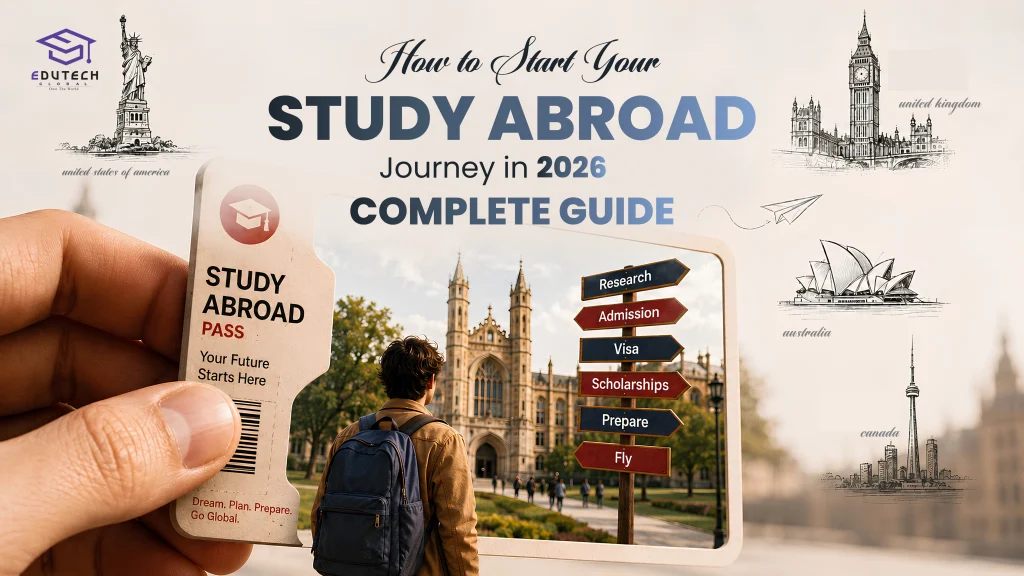
How to Start Your Study Abroad Journey in 2026 A Complete Guide

How to Start Your Study Abroad Journey in 2026: Complete Guide

Planning to study abroad in 2026, but don’t know where to start? You’re not alone. Every year, thousands of Indian students dream of studying in countries like the UK, Germany, Canada, France, Ireland, and Australia, but many struggle with choosing the right course, university, and visa process. This step-by-step guide explains everything, from career planning to boarding your flight, so you can confidently begin your study abroad journey.  From choosing the right country and course to securing a student visa, the process can seem overwhelming. This guide provides a simple, step-by-step roadmap that covers everything, from career planning to boarding your flight, so you can confidently start your study abroad journey. Why Planning Early Matters for Studying Abroad Starting your preparation early gives you a significant advantage. Access to more universities and courses Better chances of winning scholarships Higher probability of student visa approval More time to prepare for the entrance and English language tests Better financial planning with reduced last-minute stress Step 1 – Decide Your Career Goal Before selecting a country, identify your long-term career objectives. Ask Yourself: What career do I want to build? Am I applying for a Bachelor’s or Master’s degree? Do I prefer research or practical learning? Is post-study work or permanent residency important? Which industry offers the best career growth? Step 2 – Choose the Right Country Every destination offers unique advantages. Country Best For Work Opportunities USA Research & Technology Excellent United Kingdom One-Year Master’s Very Good Germany Affordable Education Excellent France Business, Luxury & Hospitality Very Good Ireland IT & Pharmaceuticals Excellent Australia Engineering & Healthcare Excellent New Zealand Quality of Life Good UAE Business & Management Growing Students considering Study in Canada, Study in the United Kingdom, or Abroad study in Germany should compare tuition costs, career prospects, and post-study work options before making a decision. Step 3 – Select the Right Course and University Don’t choose a university based only on rankings. Consider: Course curriculum Global reputation Internship opportunities Graduate employability Tuition fees Scholarships Industry partnerships Alumni network Campus location Step 4 – Check Eligibility Requirements Most universities evaluate applicants based on academics and language proficiency. Academic Requirements Previous academic qualifications Minimum percentage or CGPA English Language Tests IELTS PTE TOEFL Duolingo OET (Healthcare) SAT (Undergraduate applicants) Additional Documents Statement of Purpose (SOP) Letters of Recommendation (LOR) Resume/CV Portfolio (if required) Step 5 – Estimate Your Budget Understanding your total expenses helps avoid financial surprises. Typical costs include: Tuition fees Accommodation Food Transportation Health insurance Student visa fees Flight tickets Emergency funds Sample Annual Budget Expense Estimated Cost Tuition Fees ₹8–35 Lakhs Accommodation ₹4–10 Lakhs Living Expenses ₹3–6 Lakhs Insurance ₹50,000–₹1 Lakh Visa & Flights ₹2–4 Lakhs Step 6 – Explore Scholarships and Education Loans Many Indian students reduce costs through scholarships and education loans. Scholarships Merit-based Need-based Government scholarships University scholarships Education Loans Public sector banks Private banks NBFCs Apply early because many scholarship deadlines close before admission deadlines. Step 7 – Prepare for English Language Tests Choose the test accepted by your preferred universities. Common exams include: IELTS PTE TOEFL Duolingo Most English language test scores remain valid for two years, so plan accordingly. Step 8 – Prepare Your Application Documents Keep every document ready before applications begin. Checklist ✔ Passport ✔ Academic Transcripts ✔ Degree Certificates ✔ Statement of Purpose (SOP) ✔ Letters of Recommendation ✔ Resume ✔ Test Scores ✔ Financial Documents ✔ Passport-size Photographs ✔ Experience Certificates (if applicable) Step 9 – Apply to Universities Increase your chances of admission by applying strategically. Best practices: Apply to multiple universities. Meet every application deadline. Track application status regularly. Respond quickly to university emails. You may receive: Conditional Offer Letter – Admission subject to meeting pending requirements. Unconditional Offer Letter – Admission confirmed. Step 10 – Accept the Offer Letter After selecting your university: Accept the admission offer. Pay the tuition deposit. Receive country-specific admission documents such as CAS (UK), I-20 (USA), or official admission confirmation. Step 11 – Apply for Your Student Visa Prepare carefully to improve visa success. The process generally includes: Completing the visa application Financial proof Medical examination (if required) Biometrics Visa interview (country-specific) Visa processing typically ranges from 2 to 12 weeks, depending on the destination. Step 12 – Arrange Accommodation Popular options include: University hostels Student residences Shared apartments Homestays Book accommodation before arriving to avoid higher costs and limited availability. Step 13 – Book Flights and Buy Insurance Before departure, arrange: Flight tickets Travel insurance Health insurance Airport pickup International SIM card Currency exchange Step 14 – Prepare Before Departure Complete your final checklist. Carry original documents Pack weather-appropriate clothing Download local transport apps. Arrange banking requirements Save emergency contacts Learn about local culture and laws. Common Mistakes Indian Students Should Avoid Avoid these common errors: Applying too late Selecting a university based only on rankings Ignoring total living expenses Writing a weak SOP Submitting incomplete documents Missing scholarship deadlines Applying to only one university Not checking visa requirements. Underestimating English test preparation Not consulting professionals when needed Experienced Overseas study consultants can help students avoid costly mistakes throughout the admission process. Study Abroad Timeline (12-Month Roadmap) Timeline Task 12–18 Months Before Career planning & country research 10–12 Months Before Shortlist universities 8–10 Months Before Prepare for IELTS/PTE/Duolingo 6–8 Months Before Submit applications 4–6 Months Before Receive offers & secure admission 2–4 Months Before Apply for student visa 1–2 Months Before Book accommodation & flights Conclusion Starting your study abroad journey becomes much easier when you follow a structured plan. From choosing the right career path and destination to preparing documents, applying for scholarships, and securing your student visa, every step plays an important role in your success. Whether your dream is to study in Canada, Study in the United Kingdom, or Abroad study in Germany, beginning your preparation early can help you maximize scholarship opportunities, secure admission to top universities, and enjoy a stress-free application experience. If you need personalized guidance, working with experienced Overseas study consultants

How to Start Your Study Abroad Journey in 2026: Complete Guide Read More »

Study in Germany for Free

Study in Germany for Free: A Complete Guide for Indian Students in 2026

Germany continues to be one of the most attractive destinations for Indian students seeking high-quality and affordable international education. With world-class universities, strong career prospects, and a tuition-free education system at many public institutions, the opportunity to study in Germany has never been more appealing. The number of Indian students pursuing study abroad in Germany continues to grow in 2026, driven by excellent academic programs, research opportunities, and post-study employment benefits. But can Indian students really study in Germany for free? The answer is yes-at most public universities, students pay little to no tuition fees. Combined with a strong economy and high demand for skilled professionals, Germany offers an exceptional return on investment for international students. Why Study in Germany in 2026? Globally Recognized Universities Germany is home to some of the world’s leading universities known for academic excellence and innovation. Degrees earned from German institutions are recognized globally and valued by employers worldwide. Tuition-Free Public Education Unlike countries such as the USA, UK, and Australia, most public universities in Germany do not charge tuition fees for international students. Students typically pay only a semester contribution fee, making higher education significantly more affordable. Strong Job Market and Career Opportunities Germany’s economy creates continuous demand for skilled graduates in sectors such as: Engineering Information Technology Healthcare Business Management Renewable Energy Artificial Intelligence Post-Study Work Benefits International graduates can apply for an extended post-study residence permit, allowing them to stay in Germany while searching for employment. This pathway can eventually lead to long-term residence and career growth. Is Education Really Free in Germany? Public Universities vs Private Universities Public universities generally offer tuition-free education, while private institutions charge annual fees ranging from €5,000 to €20,000 or more. For most Indian students, public universities provide the best balance of quality and affordability. Semester Contribution Fee Explained Although tuition is free, students must pay a semester contribution fee, usually between €150 and €350. This fee often covers: Administrative services Student welfare programs Public transportation benefits Additional Costs Students Should Consider Students should budget for: Accommodation Food and daily living expenses Health insurance Study materials Transportation Eligibility Requirements for Indian Students Academic Qualifications Bachelor’s Programs Completion of Class 12 with required academic performance Eligibility equivalent to German university entrance standards Master’s Programs Relevant bachelor’s degree Minimum GPA requirements depending on the university Language Proficiency Requirements English-taught programs typically require: IELTS: 6.0–7.0 TOEFL equivalent scores German-taught programs may require: TestDaF DSH Goethe Certification APS Certificate Requirement Indian students must obtain an APS Certificate before applying for a Germany student visa. The APS process verifies academic qualifications and has become a mandatory requirement for applicants from India. Top Tuition-Free Universities in Germany for Indian Students Recommended Public Universities Technical University of Munich (TUM) Ludwig Maximilian University of Munich (LMU) Heidelberg University RWTH Aachen University University of Hamburg These institutions consistently rank among Germany’s top universities and offer excellent academic and research opportunities. Popular Courses for Indian Students Some of the most sought-after programs include: Engineering Computer Science & Artificial Intelligence Data Science Automotive Engineering Business & Management Renewable Energy Step-by-Step Application Process for Germany in 2026 Step 1: Choose Your Course and University Research programs carefully and verify eligibility criteria before applying. Step 2: Prepare Required Documents Required documents generally include: Academic transcripts Passport Statement of Purpose (SOP) Letters of Recommendation (LORs) Resume/CV IELTS or TOEFL scores Step 3: Obtain APS Certificate Complete document verification through the APS India process before proceeding with university applications. Step 4: Apply Through University Portal or Uni-Assist Many universities accept applications through Uni-Assist, while others use their own admission portals. Step 5: Receive Admission Letter After successful evaluation, universities issue admission offers. Step 6: Apply for Student Visa Submit your visa application with all required documents and prepare for the visa interview if requested. Cost of Living in Germany for Indian Students (2026) Average Monthly Expensesz Expense Category Estimated Monthly Cost Accommodation €350–€700 Food €150–€300 Transportation €30–€70 Health Insurance €120–€140 Miscellaneous €100–€250 Estimated Annual Budget Most students should budget approximately €11,000–€15,000 annually for living expenses. Budgeting Tips Use student housing whenever possible. Take advantage of public transport discounts. Work part-time to supplement living costs. Scholarships Available for Indian Students Government-Funded Scholarships DAAD Scholarships The German Academic Exchange Service (DAAD) offers one of the most prestigious funding opportunities for international students. Deutschlandstipendium Provides financial support to talented and high-achieving students. University-Specific Scholarships Many German universities offer: Merit-based scholarships Research grants Department-specific funding External Funding Options Additional funding may be available through: International foundations Corporate sponsorships Private scholarship organizations Part-Time Jobs for International Students in Germany Work Rights for Students International students can legally work while studying, subject to German employment regulations. Popular Student Jobs Common opportunities include: Research Assistant Tutor Retail Associate Hospitality Staff Customer Support Roles Average Earnings Students typically earn between €12 and €18 per hour depending on location and job type. Part-time work can significantly offset living expenses. Student Visa Process for Germany in 2026 Documents Required To apply for a Germany student visa, students generally need: University admission letter APS Certificate Valid Passport Proof of Health insurance Proof of accommodation Financial documents Blocked Account Requirement A blocked account demonstrates sufficient financial resources to support your stay in Germany. Students must deposit the required amount specified by German authorities before visa approval. Germany Study Visa Cost The Germany study visa cost includes: Visa application fee APS processing fee Blocked account setup charges Health insurance costs Visa Processing Timeline Students should apply at least 8–12 weeks before their intended travel date. Processing times vary depending on application volume and embassy schedules. Challenges Indian Students May Face in Germany Language and Cultural Adaptation Even in English-taught programs, learning basic German can improve daily life and employment opportunities. Finding Accommodation Student housing demand is high, especially in major cities such as Munich, Berlin, and Hamburg. Academic Expectations German universities emphasize independent learning, research, and critical thinking. Weather and Lifestyle Adjustments Indian students may need time to adapt to colder climates and

Study in Germany for Free: A Complete Guide for Indian Students in 2026 Read More »

Study Abroad Consultants in India

Study Abroad Consultants in India: What to Look for Before You Choose

Studying abroad has become one of the most popular aspirations among Indian students seeking global education, international exposure, and better career opportunities. Countries like Canada, the UK, the USA, Australia, and Germany continue to attract thousands of students every year due to their high-quality education systems and promising career prospects. However, the journey from choosing a destination to securing a student visa involves multiple steps, including university selection, application preparation, financial planning, and visa documentation. This is where a trusted study abroad consultant in India can play a crucial role. Professional consultants offer comprehensive education abroad services, helping students make informed decisions and avoid common mistakes. With so many agencies claiming to be the best consultancy for study abroad, it is important to evaluate them carefully before making a decision. This guide highlights the key factors students should consider when selecting an overseas consultancy for their international education journey. Why Do Students Need Study Abroad Consultants in India? Planning for overseas education can be challenging, especially for first-time applicants. Students often struggle with understanding admission requirements, selecting suitable universities, managing deadlines, and navigating visa procedures. Some common challenges include: Choosing the right country and course Understanding university admission criteria Preparing application documents Meeting application deadlines Managing visa requirements Finding scholarships and financial support A professional study abroad counsellor helps simplify these processes by providing personalized guidance based on a student’s academic background, career goals, and budget. Their expertise ensures students make informed decisions and improve their chances of success. Experience and Reputation of the Consultant One of the first things students should evaluate is the consultant’s experience and credibility in the industry. An experienced study abroad consultant in India will have in-depth knowledge of university requirements, visa regulations, scholarship opportunities, and changing immigration policies. Their expertise can help students avoid costly mistakes and improve their overall application quality. Before selecting an overseas consultancy, consider the following: Years of experience in overseas education consulting Student admission success stories Visa approval rates Online reviews and testimonials Industry recognition and certifications The best consultancy for study abroad will always maintain transparency and provide realistic guidance rather than making false promises. Range of Education Abroad Services Offered The quality of education abroad services often determines how smooth the study abroad process will be. Students should choose a consultant that provides end-to-end support rather than limited services. University and Course Selection Selecting the right university and course is one of the most important decisions in a student’s academic journey. A reliable consultant should offer: Profile evaluation Career counseling Course recommendations University shortlisting The goal should be to align academic choices with long-term career objectives. Application Support University applications require careful preparation and attention to detail. Consultants should assist with: Statement of Purpose (SOP) guidance Letter of Recommendation (LOR) support Resume building Application review Submission assistance Visa Assistance Visa approval is often the most critical stage of the process. An experienced study abroad counsellor should help students with: Document preparation Financial documentation Visa application filing Mock visa interviews Compliance checks Financial Guidance Many students require assistance in managing study abroad expenses. A good consultant should provide guidance on: Scholarships and grants Education loans Budget planning Cost estimation Pre-Departure and Post-Arrival Support The support shouldn’t end after admission. Leading consultants often provide: Accommodation assistance Travel guidance Forex support Student onboarding services Comprehensive education abroad services help students transition smoothly into their new academic environment. Knowledge About Countries, Universities, and Courses Different countries have unique education systems, admission processes, and post-study opportunities. Therefore, destination-specific expertise is essential when selecting an overseas consultancy. Canada Canada remains a top destination due to its strong job market, post-graduation work opportunities, and pathways to permanent residency. United Kingdom (UK) The UK offers globally recognized universities, shorter master’s programs, and attractive post-study work opportunities. United States (USA) The USA is known for its diverse academic programs, research opportunities, and strong career prospects for international students. Australia Australia provides excellent education quality, work opportunities, and a high standard of living. Germany Germany is increasingly popular for its affordable education options and strong demand for skilled professionals. The best consultancy for study abroad should provide guidance based not only on admissions but also on career outcomes and future employability. Transparency in Fees and Processes Transparency is one of the most important indicators of a trustworthy study abroad consultant in India. Students should avoid consultants who: Guarantee visas or admissions Promise unrealistic outcomes Hide service charges Pressure students into making quick decisions A professional consultant should clearly explain: Service fees University application costs Visa-related expenses Additional charges, if any Honest advice and transparent pricing help students make confident decisions and avoid unnecessary financial surprises. Check Partnerships With International Universities Official university partnerships often reflect a consultant’s credibility and industry recognition. An established overseas consultancy may work directly with international institutions, providing students with access to updated admission information and scholarship opportunities. Benefits of working with authorized representatives include: Accurate admission guidance Direct communication with universities Faster application processing Access to exclusive opportunities However, students should ensure recommendations are based on their goals rather than partnership incentives. Personalized Counseling Approach Every student has unique academic achievements, career aspirations, and financial circumstances. Therefore, personalized guidance is essential. A qualified study abroad counsellor should provide: One-on-one counseling Customized university recommendations Career-focused planning Realistic admission assessments Avoid consultants who promote the same universities to every student without considering individual profiles. Student Reviews, Testimonials, and Success Stories Student feedback can provide valuable insights into the quality of services offered by a consultant. Before finalizing a consultant, review: Google ratings Student testimonials Social media feedback Alumni success stories The best consultancy for study abroad will have a strong track record of successful admissions, visa approvals, and satisfied students. Focus on genuine results rather than marketing claims. Support for Visa and Immigration Guidance Visa regulations frequently change, making expert guidance increasingly important. An experienced study abroad consultant in India should stay updated with the latest immigration policies and documentation requirements. Proper visa

Study Abroad Consultants in India: What to Look for Before You Choose Read More »

Top 10 Courses in Canada

Top 10 Courses in Canada with Highest PR and Job Opportunities in 2026

Canada continues to be one of the most preferred study destinations for international students in 2026. With its world-class education system, strong economy, multicultural society, and welcoming immigration policies, Canada attracts thousands of students every year to build successful careers and secure Permanent Residency (PR). As Canada’s labor market faces shortages across healthcare, technology, engineering, construction, education, and agriculture sectors, the government actively supports immigration pathways for skilled professionals. This makes choosing the right course more important than ever. For students planning to study in Canada, selecting a program with strong employment prospects and PR potential can significantly improve long-term career and settlement opportunities. In this guide, we explore the top 10 courses in Canada with the highest PR and job opportunities in 2026, along with salaries, career prospects, and the best provinces for employment. Why Choosing the Right Course Matters for PR in Canada Many international students planning an abroad study in Canada focus only on university rankings or tuition fees. However, your course selection can directly impact:  Employment opportunities after graduation Eligibility for Post-Graduation Work Permit (PGWP) Access to Provincial Nominee Programs (PNPs) Express Entry CRS scores Long-term career growth Permanent Residency eligibility Choosing a course aligned with Canada’s labor market needs can significantly increase your chances of obtaining PR. Understanding Canada’s Immigration System Express Entry Express Entry is Canada’s primary immigration system for skilled workers. It manages applications under: Federal Skilled Worker Program (FSWP) Federal Skilled Trades Program (FSTP) Canadian Experience Class (CEC) Applicants receive Comprehensive Ranking System (CRS) scores based on factors such as education, age, language proficiency, and work experience. Provincial Nominee Programs (PNPs) Most Canadian provinces operate PNPs to attract workers in occupations facing shortages. Popular provinces include: Ontario British Columbia Alberta Saskatchewan Manitoba Nova Scotia Many PNP streams prioritize graduates in high-demand occupations. Canadian Experience Class (CEC) International students who gain skilled work experience in Canada after graduation can apply for PR through the Canadian Experience Class pathway. Factors Considered While Selecting These Courses The following criteria were used to identify the best PR-friendly courses in Canada for 2026: Current labor market demand Future job growth projections PR-friendly occupations Average salary levels Availability of jobs across provinces Industry stability and long-term growth Top 10 Courses in Canada with Highest PR and Job Opportunities in 2026 1. Nursing and Healthcare Programs Popular Courses Bachelor of Nursing (BSc Nursing) Practical Nursing Healthcare Administration Public Health Healthcare Management Why It’s PR-Friendly Canada is experiencing a nationwide shortage of healthcare professionals. Nurses and healthcare workers are consistently listed among the most in-demand occupations across provinces. Top Career Opportunities Registered Nurse Licensed Practical Nurse Healthcare Administrator Community Health Worker Clinical Coordinator 2. Information Technology (IT) and Computer Science Popular Courses Computer Science Software Engineering Cybersecurity Artificial Intelligence Cloud Computing Why It’s PR-Friendly Canada’s technology sector continues to expand rapidly. Skilled IT professionals remain in high demand across major cities and provinces. Top Career Opportunities Software Developer Cybersecurity Analyst AI Engineer Cloud Architect Full-Stack Developer 3. Data Science and Analytics Popular Courses Data Analytics Business Intelligence Big Data Analytics Machine Learning Data Engineering Why It’s PR-Friendly Organizations increasingly rely on data-driven decision-making, creating strong demand for analytics professionals. Top Career Opportunities Data Scientist Data Analyst Business Intelligence Analyst Machine Learning Specialist Data Engineer 4. Engineering Programs Popular Specializations Civil Engineering Mechanical Engineering Electrical Engineering Environmental Engineering Why It’s PR-Friendly Infrastructure development, urban expansion, and clean-energy projects continue to drive demand for engineers. Top Career Opportunities Civil Engineer Mechanical Engineer Electrical Engineer Environmental Consultant Project Engineer 5. Construction Management and Skilled Trades Popular Courses Construction Project Management Building Technology Carpentry Plumbing Electrical Trades Why It’s PR-Friendly Canada faces a significant shortage of skilled trades workers, making this sector one of the strongest pathways to employment and PR. Top Career Opportunities Construction Manager Electrician Plumber Site Supervisor Building Inspector 6. Business Management and Finance Popular Courses MBA Business Analytics Finance Supply Chain Management International Business Why It’s PR-Friendly Business professionals remain essential across industries, especially those with specialized skills in analytics and finance. Top Career Opportunities Financial Analyst Business Consultant Operations Manager Investment Analyst Business Development Manager 7. Supply Chain and Logistics Management Popular Courses Logistics Management Global Supply Chain Management Operations Management Procurement Management Why It’s PR-Friendly Global trade growth and e-commerce expansion have increased demand for logistics professionals. Top Career Opportunities Supply Chain Analyst Logistics Manager Procurement Specialist Operations Coordinator Distribution Manager 8. Early Childhood Education (ECE) Popular Courses Early Childhood Education Diploma Child Development Programs Educational Assistant Programs Why It’s PR-Friendly Many provinces are investing heavily in childcare services, creating substantial demand for qualified educators. Top Career Opportunities Early Childhood Educator Childcare Supervisor Preschool Teacher Child Development Specialist 9. Renewable Energy and Environmental Sciences Popular Courses Environmental Management Renewable Energy Technology Sustainability Studies Climate Change Management Why It’s PR-Friendly Canada’s commitment to clean energy and environmental sustainability is creating new employment opportunities. Top Career Opportunities Sustainability Consultant Environmental Analyst Renewable Energy Specialist Climate Policy Advisor 10. Agricultural and Food Sciences Popular Courses Agricultural Technology Food Science Agribusiness Management Precision Agriculture Why It’s PR-Friendly Agriculture remains a critical industry, especially in provinces such as Saskatchewan and Manitoba. Top Career Opportunities Food Scientist Agricultural Consultant Agribusiness Manager Quality Assurance Specialist Best Provinces in Canada for PR and Employment in 2026 Ontario Key Industries Technology Healthcare Finance Manufacturing PNP Advantage Strong opportunities through the Ontario Immigrant Nominee Program (OINP). British Columbia Key Industries Technology Clean Energy Healthcare Tourism PNP Advantage Regular invitations for tech and healthcare occupations. Alberta Key Industries Energy Engineering Construction Agriculture PNP Advantage Growing economy with favorable immigration streams. Saskatchewan Key Industries Agriculture Skilled Trades Manufacturing PNP Advantage Strong pathways for skilled workers and graduates. Manitoba Key Industries Agriculture Logistics Manufacturing PNP Advantage Graduate-focused immigration programs. Nova Scotia Key Industries Healthcare Education Technology Marine Industries PNP Advantage Frequent invitations for in-demand occupations. Courses to Avoid If Your Main Goal Is PR While every field has value, some programs may offer limited PR opportunities due to lower labor

Top 10 Courses in Canada with Highest PR and Job Opportunities in 2026 Read More »

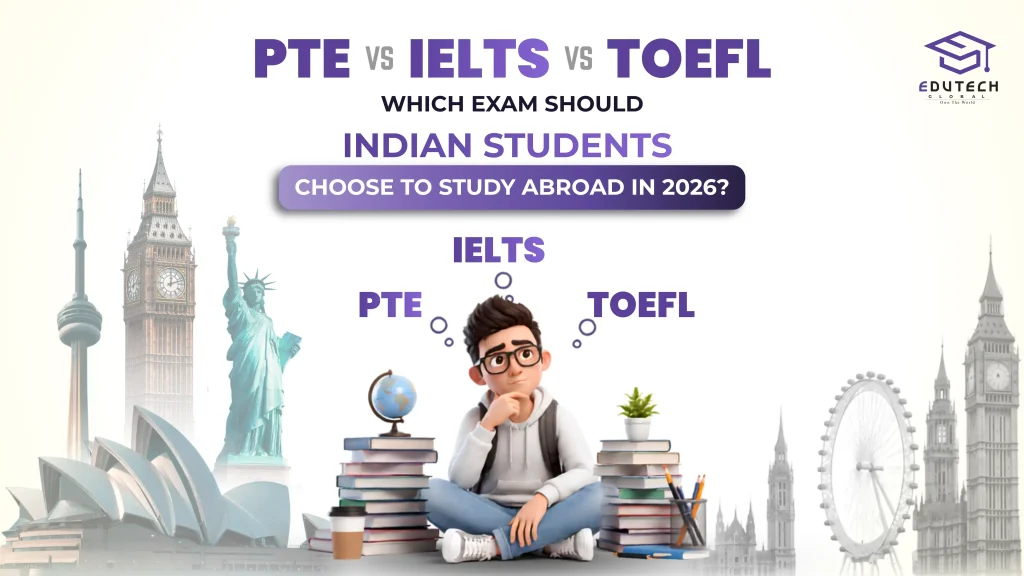
PTE vs IELTS vs TOEFL

PTE vs IELTS vs TOEFL: Which Exam Should Indian Students Choose to Study Abroad in 2026?

Planning to study abroad in 2026? One of the first and most important decisions you’ll make is choosing an English proficiency test. Most universities in countries like Canada, Australia, the UK, the USA, New Zealand, and Ireland require proof of English language skills before granting admission. The three most popular exams are PTE Academic, IELTS Academic, and TOEFL iBT. While all three assess your English proficiency, they differ in format, scoring, difficulty level, result timelines, and student experience. This guide compares PTE vs IELTS vs TOEFL to help Indian students select the best exam for their study abroad goals in 2026. Why English Language Tests Matter for Studying Abroad English proficiency exams serve several purposes: Meet university admission requirements Fulfill student visa requirements Demonstrate academic communication skills Improve scholarship eligibility Prove readiness for an international learning environment Most universities accept multiple English language tests, giving students flexibility when choosing an exam. What is PTE Academic? Pearson Test of English (PTE Academic) is a fully computer-based English proficiency exam. Key Features: AI-based scoring system Fully computer-delivered format Results typically available within 24–48 hours Accepted by thousands of universities worldwide Recognized for student visa applications in major study destinations Best For: Students who are comfortable using computers and prefer objective, technology-driven evaluation. What is IELTS Academic? International English Language Testing System (IELTS Academic) is one of the most widely accepted English proficiency tests globally. Key Features: Available in paper-based and computer-delivered formats Speaking test conducted with a human examiner Accepted by universities in over 140 countries Popular among students applying to the UK, Canada, and Australia Best For: Students who prefer face-to-face communication during the speaking section. What is TOEFL iBT? Test of English as a Foreign Language (TOEFL iBT) is an internet-based exam that focuses heavily on academic English. Key Features: Fully online testing format Strong emphasis on university-level English Widely accepted in the USA and Canada Integrated tasks that combine reading, listening, speaking, and writing skills Best For: Students applying primarily to US universities and comfortable with academic content. PTE vs IELTS vs TOEFL: Key Differences Exam Format Comparison Feature PTE Academic IELTS Academic TOEFL iBT Test Mode Computer-Based Paper or Computer Computer-Based Speaking Format AI-Assessed Human Examiner Recorded Responses Test Duration Around 2 Hours Around 2 Hours 45 Minutes Around 2 Hours Result Time 24–48 Hours 1–13 Days 4–8 Days Scoring Method AI-Based Human & Computer Evaluation Human & AI Evaluation Which Exam Is Easier? One of the most common questions students ask is: “Is PTE easier than IELTS or TOEFL?” The answer depends on your strengths. PTE May Be Easier If: You type quickly You are comfortable speaking into a microphone You prefer AI scoring You want faster results IELTS May Be Easier If: You prefer interacting with a human examiner You are comfortable with traditional exam formats You perform better in face-to-face communication TOEFL May Be Easier If: You have strong academic English skills You can handle integrated reading and listening tasks You are targeting universities in North America There is no universally easy test. Success depends on preparation and personal learning style. Acceptance by Universities and Countries PTE Acceptance PTE is widely accepted by universities and government authorities in: Canada Australia United Kingdom United States New Zealand Ireland Its popularity among international students continues to grow due to quick results and AI-based scoring. IELTS Acceptance IELTS remains the most globally recognized English language test. It is accepted by: More than 11,000 organizations worldwide Universities in the UK, Australia, Canada, and the USA Immigration authorities in several countries Many students choose IELTS because of its long-standing reputation and broad acceptance. TOEFL Acceptance TOEFL is particularly strong in North America. It is accepted by: Top US universities Canadian institutions Global graduate schools Research-focused programs Students targeting prestigious American universities often consider TOEFL a preferred option. Best Exam Based on Study Destination For Canada Recommended: IELTS PTE TOEFL Many Canadian universities accept all three exams. Students should verify specific program requirements before applying. For Australia Recommended: PTE IELTS Both exams are commonly used for university admissions and visa applications. For the United Kingdom Recommended: IELTS PTE IELTS remains highly popular, but many UK universities now accept PTE as well. For the United States Recommended: TOEFL IELTS PTE TOEFL has traditionally dominated the US market, though acceptance of IELTS and PTE continues to increase. Exam Fees Comparison in India (2026) While fees may change slightly during the year, students should budget for: Exam Approximate Fee Range PTE Academic ₹17,000–₹18,000 IELTS Academic ₹17,000–₹18,000 TOEFL iBT ₹16,000–₹18,500 Additional charges may apply for: Rescheduling Late registration Additional score reports Test retakes Always check official websites for the latest pricing. Preparation Tips for Indian Students Regardless of the exam you choose, preparation is crucial. 1. Take a Diagnostic Test Understand your current English proficiency level before creating a study plan. 2. Learn the Exam Format Many students lose marks because they are unfamiliar with question types and timing. 3. Focus on Weak Areas Identify whether reading, writing, speaking, or listening needs improvement. 4. Practice with Official Resources Use official mock tests and preparation materials whenever possible. 5. Improve Academic Vocabulary Strong vocabulary improves performance across all sections. 6. Seek Professional Guidance Working with experienced study abroad education consultants can help you choose the right exam and preparation strategy. Final Verdict: Which Exam Should Indian Students Choose in 2026? Choosing between PTE vs IELTS vs TOEFL depends on your study destination, preferred test format, and personal strengths. Choose PTE If: You want fast results. You prefer computer-based testing. You are comfortable with AI evaluation. Choose IELTS If: You want the most widely accepted option. You prefer speaking with a human examiner. You are applying to multiple countries. Choose TOEFL If: You are targeting US universities. You have strong academic English skills. You are comfortable with integrated tasks. Ultimately, the best English proficiency test is the one that aligns with your university requirements and test-taking style. Before registering, consult experienced study abroad education consultants who

PTE vs IELTS vs TOEFL: Which Exam Should Indian Students Choose to Study Abroad in 2026? Read More »

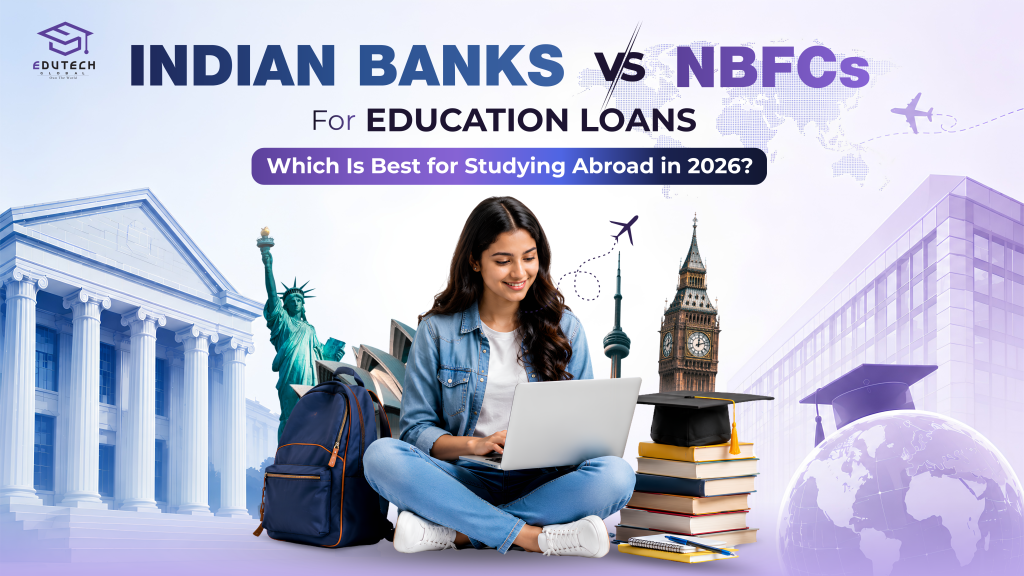
Education Loans

Indian Banks vs NBFCs for Education Loans: Which Is Best Fund for Studying Abroad in 2026?

Studying abroad remains a top goal for Indian students in 2026. Countries such as the USA, UK, Canada, Australia, Germany, and Ireland continue to attract students with globally recognized degrees, international exposure, and strong career opportunities. However, rising tuition fees and living expenses have made financial planning more important than ever. For many families, an education loan for abroad studies is the most practical way to fund international education. Study abroad education consultants can help students choose the right financing option. One of the biggest decisions is selecting between an education loan from an Indian bank or an NBFC (Non-Banking Financial Company).  Both options offer unique benefits, but the right choice depends on factors such as loan amount, approval speed, interest rates, and repayment flexibility. This guide compares Indian banks and NBFCs to help you make an informed decision in 2026. What is an NBFC A Non-Banking Financial Company (NBFC) is a financial institution that offers services such as loans, asset financing, and investments without being a traditional bank. NBFCs play a vital role in expanding access to credit and supporting economic growth. Why Education Loans Are Important for Studying Abroad The cost of studying abroad includes much more than tuition fees. Students must also cover: Accommodation expenses Living costs Health insurance Visa fees Travel expenses Books and study materials Depending on the destination and program, the total investment can range from ₹15 lakh to over ₹80 lakh. An education loan helps students: Access quality international education Reduce the immediate financial burden on families Preserve savings and investments Meet visa financial requirements Focus on academics instead of financial stress As global education becomes more competitive, education loans have become a key part of study abroad planning. Education Loans from Indian Banks Indian banks have traditionally been the preferred choice for funding overseas education. Both public and private sector banks offer dedicated education loan products for international studies. Advantages of Bank Education Loans Lower Interest Rates Banks generally offer lower interest rates compared to NBFCs, helping students reduce overall borrowing costs. Longer Repayment Period Many banks provide repayment tenures of up to 15 years, making monthly installments more manageable. Government Support Some bank loans may qualify for government-backed education loan schemes and subsidies. Strong Credibility Banks operate under strict regulations, offering greater transparency and reliability. Challenges of Bank Education Loans Approval processes can be time-consuming. Extensive documentation is often required. Higher loan amounts may require collateral. Eligibility criteria can be stricter. Students with strong academic records and financial backing often benefit most from bank loans. Education Loans from NBFCs NBFCs have become increasingly popular among students seeking faster and more flexible funding options for overseas education. Many NBFCs specialize in education financing and understand the unique requirements of international students. Advantages of NBFC Education Loans Faster Loan Approval NBFCs typically process applications more quickly than banks, which is helpful when university deadlines are approaching. Flexible Eligibility Students with diverse academic profiles may find it easier to qualify. Higher Funding Coverage Many NBFCs offer loans that cover a larger percentage of the total education cost. Collateral-Free Options Several NBFCs provide unsecured education loans for selected universities and programs. Challenges of NBFC Education Loans Interest rates are usually higher than bank loans. Processing fees may be higher. Repayment flexibility can be comparatively limited. Government subsidy benefits are generally unavailable. NBFCs are often preferred by students who need quick approvals or do not have collateral. Indian Banks vs NBFCs: A Quick Comparison Factor Indian Banks NBFCs Interest Rates Lower Higher Approval Speed Moderate Fast Documentation Extensive Flexible Collateral Requirement Often Required Available Without Collateral Loan Coverage Moderate to High High Repayment Tenure Longer Moderate Processing Fees Lower Higher Approval Chances More Selective Higher This comparison shows that banks are generally more cost-effective, while NBFCs focus on convenience and flexibility. Which Option Is Better for You? Choose a Bank If You: Want lower interest rates Have a strong academic profile Can provide collateral if required Prefer a longer repayment period Have enough time for loan processing Choose an NBFC If You: Need quick loan approval Require a collateral-free loan Have a non-traditional academic profile Need higher funding coverage Are working with tight admission deadlines The ideal lender depends on your financial situation and study plans rather than a one-size-fits-all approach. Factors to Consider Before Applying Before selecting any lender, compare the following: Interest Rate A lower interest rate can significantly reduce the total repayment amount over time. Processing Fees Look beyond interest rates and review all applicable charges. Grace Period  Understand when repayment begins and how long you can defer payments. Repayment Flexibility Choose a lender that offers manageable repayment terms based on your future earning potential. Prepayment Conditions Check whether there are penalties for repaying the loan early. Total Loan Coverage Ensure the loan covers tuition fees, accommodation, travel, insurance, and other academic expenses. Carefully evaluating these factors can help avoid financial challenges later. Common Mistakes Students Make Many students make avoidable mistakes during the education loan process. Applying Too Late Delays can impact university admissions and visa applications. Focusing Only on Interest Rates A lower rate does not always mean a better loan. Compare fees, repayment terms, and flexibility. Ignoring Hidden Charges Processing fees and additional costs can increase the total loan amount. Not Comparing Multiple Lenders Evaluating several options often leads to better terms and conditions. Misunderstanding Repayment Obligations Students should fully understand EMI schedules, grace periods, and co-applicant responsibilities before signing any agreement. How Study Abroad Consultants Can Help Choosing the right lender can be challenging, especially for first-time applicants. This is where study abroad education consultants and overseas education consultants play an important role. Professional consultants can assist with: University selection Loan eligibility assessment Documentation support Comparing banks and NBFCs Visa financial documentation Faster application processing Their expertise helps students identify financing options that align with both academic and financial goals. Education Loan Trends in 2026 The education financing market continues to evolve. Key trends include: Growth in collateral-free

Indian Banks vs NBFCs for Education Loans: Which Is Best Fund for Studying Abroad in 2026? Read More »

Study in United Kingdom

Study in UK After 12th: Complete Roadmap for Indian Students (2026–27)

The United Kingdom remains one of the most preferred destinations for Indian students seeking quality international education after Class 12. With globally recognized degrees, world-class universities, shorter course durations, and strong career prospects, the UK offers an excellent pathway for students aiming to build successful global careers. For students planning to study in United Kingdom in 2026–27, understanding the admission process, eligibility requirements, costs, scholarships, and visa procedures is essential. A well-planned approach can significantly improve your chances of securing admission to top universities and achieving your long-term academic and career goals. This comprehensive guide provides a step-by-step roadmap to help Indian students navigate the journey of studying in the UK after 12th. Why Study in the UK After 12th? The UK has consistently attracted international students due to its high academic standards and globally respected institutions. Key Benefits of Studying in the UK 1. World-Class Education The UK is home to some of the world’s most prestigious universities, offering innovative teaching methods and research-driven learning. 2. Globally Recognized Degrees Degrees earned from UK universities are highly valued by employers worldwide, opening doors to international career opportunities. 3. Shorter Course Duration Most undergraduate programs in the UK are completed in three years, allowing students to graduate faster and reduce overall education costs. 4. Strong Career Opportunities The UK offers excellent employment opportunities in sectors such as technology, healthcare, finance, engineering, and business management. 5. Multicultural Environment Students from over 180 countries study in the UK, creating a diverse and inclusive learning environment. Eligibility Criteria to Study in the UK After 12th Before applying, students must meet specific academic and language requirements. Academic Requirements Most UK universities require: Completion of Class 12 from a recognized board Minimum academic scores based on course requirements Strong performance in relevant subjects Additional entrance requirements for specialized programs Competitive universities may require higher academic achievements and additional assessments. English Language Requirements International students must demonstrate English proficiency through approved tests such as: IELTS Academic PTE Academic TOEFL iBT Duolingo English Test (accepted by selected institutions) Typical IELTS requirements range between 6.0 and 7.0 overall, depending on the university and course. Some institutions may offer IELTS waivers if students have completed their education in English-medium schools. Best Courses to Study in the UK After 12th The UK offers a wide variety of undergraduate programs across multiple disciplines. Business and Management Popular specializations include: Business Administration International Business Marketing Entrepreneurship Finance Engineering and Technology Students can pursue: Mechanical Engineering Civil Engineering Electrical Engineering Aerospace Engineering Software Engineering Computer Science and Artificial Intelligence High-demand programs include: Computer Science Artificial Intelligence Data Science Cybersecurity Machine Learning Healthcare and Medicine Popular options include: Medicine Nursing Pharmacy Public Health Biomedical Sciences Law The UK remains one of the world’s leading destinations for legal education. Hospitality and Tourism Management Ideal for students seeking careers in global hospitality and tourism sectors. Top UK Universities for Indian Students (2026–27) Many UK universities for Indian students offer excellent academic programs, scholarship opportunities, and international student support services. Leading Universities in the UK University of Oxford University of Cambridge Imperial College London University College London (UCL) King’s College London University of Manchester University of Edinburgh University of Warwick University of Bristol University of Glasgow These institutions consistently rank among the world’s top universities and attract students from across the globe. Step-by-Step Admission Process Applying to UK universities involves several important stages. Step 1: Research Universities and Courses Choose universities based on: Course content Rankings Tuition fees Career outcomes Location preferences Step 2: Check Eligibility Requirements Review the academic and English-language requirements for your selected programs. Step 3: Prepare Required Documents Common documents include: Academic transcripts Passport Statement of Purpose (SOP) Letters of Recommendation (if required) English language test scores Step 4: Apply Through UCAS Most undergraduate applications are submitted through the Universities and Colleges Admissions Service (UCAS). Step 5: Receive Offer Letters Universities may issue: Conditional Offers Unconditional Offers Step 6: Accept Your Offer Select your preferred university and confirm admission. Step 7: Apply for a UK Student Visa After receiving your Confirmation of Acceptance for Studies (CAS), begin your visa application process. Step 8: Arrange Accommodation and Travel Secure student housing and book travel well before departure. Cost of Studying in the UK Understanding the financial commitment is essential for planning your education abroad. Tuition Fees Average annual tuition fees: Course Approximate Annual Tuition Business & Management £15,000 – £25,000 Engineering £18,000 – £30,000 Computer Science £18,000 – £28,000 Healthcare Programs £20,000 – £40,000 Actual costs vary by institution and program. Living Expenses Average annual living costs: London: £12,000 – £18,000 Other Cities: £9,000 – £14,000 Expenses include: Accommodation Food Transportation Utilities Personal expenses Scholarships for Indian Students Scholarships can significantly reduce the cost of studying abroad. Popular UK Scholarships GREAT Scholarships Offered by participating UK universities for international students. Commonwealth Scholarships Available for students from Commonwealth nations. Chevening Scholarships Highly competitive scholarships funded by the UK government. University-Specific Scholarships Many universities offer merit-based scholarships for international students. Students should apply early, as scholarship deadlines often close months before admission deadlines. UK Student Visa Process (2026–27) Obtaining a UK student visa is one of the most important steps in your study abroad journey. Requirements for a UK Student Visa Students typically need: Valid passport Confirmation of Acceptance for Studies (CAS) Proof of financial funds English language proficiency evidence Tuberculosis test certificate (if required) Visa Application Process Receive CAS from your university. Complete the online visa application. Pay visa and healthcare surcharge fees. Submit biometrics. Attend appointments if required. Await visa decision. Applying early helps avoid delays during peak admission periods. Work Opportunities While Studying International students can work part-time during their studies. Typical Work Permissions Up to 20 hours per week during academic sessions Full-time during official holidays Popular student jobs include: Retail assistant Customer service representative Campus ambassador Administrative assistant Hospitality staff Part-time work can help students gain valuable experience and support living expenses. Post-Study Work Opportunities The UK offers attractive post-study work

Study in UK After 12th: Complete Roadmap for Indian Students (2026–27) Read More »

Contact Us

Start your study abroad journey

This field is required.
WhatsApp
Call Now
Instagram

Your privacy matters

We use website data responsibly to improve your experience and keep our services secure. By continuing to use this site, you agree to our Privacy Policy and Terms & Conditions.